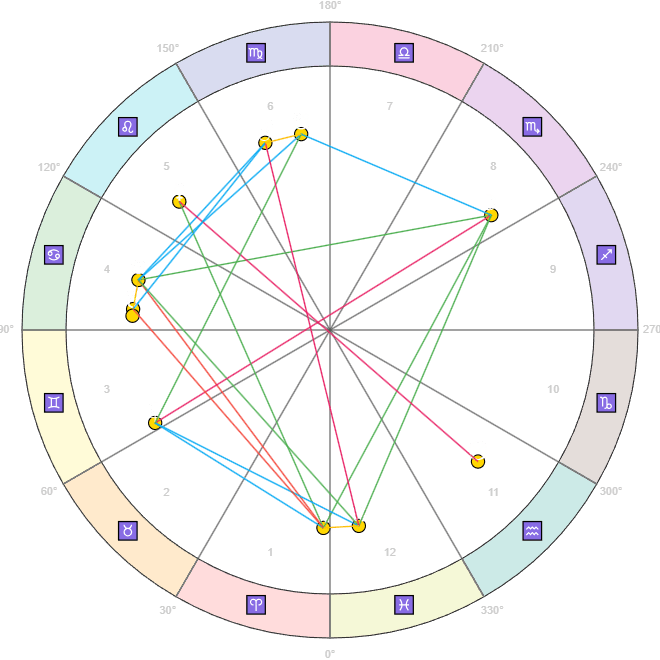
Horochan Birth Chart Free
Get your free birth chart within seconds

Horochan
Understanding Your Vedic Astrology Birth Chart: A Comprehensive Guide
Have you ever wondered what the stars held in store for you at the moment of your birth? Vedic astrology, also known as Jyotisha, offers profound insights into your personality, life path, and potential through the analysis of your birth chart. This ancient system, rooted in Indian philosophy and astronomy, provides a detailed map of the planetary positions at the time of your birth and how they influence your life.
What is a Vedic Astrology Birth Chart?
A Vedic astrology birth chart, or Kundli, is a snapshot of the celestial positions at the exact moment and location of your birth. It's a circular chart divided into twelve houses, each representing different areas of life such as career, relationships, finances, and health. Within these houses reside the planets, each exerting its unique influence based on its sign and placement.
Key Components of a Vedic Birth Chart
- The Ascendant (Lagna): This is the sign rising on the eastern horizon at the time of your birth. It represents your personality, physical appearance, and initial approach to life. Finding your ascendant is the first step in understanding your chart.
- Planets: In Vedic astrology, the primary planets considered are the Sun, Moon, Mars, Mercury, Jupiter, Venus, and Saturn. Rahu (North Node) and Ketu (South Node) are also crucial points in the chart. Each planet signifies different aspects of your life.
- Houses: As mentioned earlier, the birth chart is divided into twelve houses. Each house represents a specific area of life:
- 1st House: Self, personality, physical appearance
- 2nd House: Finances, family, speech
- 3rd House: Siblings, communication, courage
- 4th House: Home, mother, happiness
- 5th House: Children, creativity, intelligence
- 6th House: Health, enemies, obstacles
- 7th House: Marriage, partnerships, relationships
- 8th House: Transformation, longevity, hidden matters
- 9th House: Luck, fortune, higher learning, spirituality
- 10th House: Career, reputation, public image
- 11th House: Gains, income, friendships
- 12th House: Expenses, spirituality, liberation
- Signs (Rashis): The twelve signs of the zodiac (Aries, Taurus, Gemini, Cancer, Leo, Virgo, Libra, Scorpio, Sagittarius, Capricorn, Aquarius, Pisces) provide the backdrop against which the planets operate. Each sign has unique characteristics that influence how a planet expresses its energy.
Understanding Planetary Positions
The position of a planet in a particular sign and house is critical to interpreting the birth chart. Here's a basic overview of what each planet signifies:
- Sun: Represents your ego, vitality, authority, and father figure. Its placement indicates where you shine and seek recognition.
- Moon: Signifies your emotions, mind, mother figure, and inner peace. Its placement reveals your emotional nature and how you nurture yourself.
- Mars: Represents energy, courage, passion, aggression, and siblings. Its placement shows where you assert yourself and how you handle conflict.
- Mercury: Signifies communication, intellect, learning, and adaptability. Its placement indicates how you process information and express yourself.
- Jupiter: Represents wisdom, expansion, luck, optimism, and spirituality. Its placement shows where you find growth and abundance.
- Venus: Signifies love, beauty, pleasure, creativity, and relationships. Its placement indicates what you value and how you attract others.
- Saturn: Represents discipline, responsibility, limitations, hard work, and delays. Its placement shows where you face challenges and learn valuable lessons.
- Rahu: The North Node, signifies desires, obsessions, and karmic lessons to be learned in this lifetime.
- Ketu: The South Node, signifies past life experiences, detachments, and areas where you may feel naturally skilled but need to move beyond.
How to Interpret Planetary Placements
Interpreting planetary placements involves considering several factors:
- Sign Placement: What sign is the planet in? For example, Mars in Aries (its own sign) is strong and assertive, while Mars in Cancer is weakened and may express itself more emotionally.
- House Placement: Which house is the planet in? For example, Jupiter in the 10th house can indicate success in career and public life.
- Aspects: Planets aspect, or influence, other planets and houses. These aspects can be positive (benefic) or negative (malefic) and further modify the planet's influence.
- Dasha System: Vedic astrology uses a dasha system, which divides your life into periods ruled by different planets. Understanding your current dasha helps to predict major life events and opportunities.
Benefits of Understanding Your Vedic Birth Chart
Analyzing your Vedic birth chart offers numerous benefits:
- Self-Awareness: Gain deeper insights into your strengths, weaknesses, and innate tendencies.
- Relationship Compatibility: Understand your compatibility with others by comparing birth charts.
- Career Guidance: Identify your ideal career path based on your planetary strengths.
- Timing of Events: Predict potential opportunities and challenges based on planetary cycles.
- Personal Growth: Use the insights to overcome obstacles and maximize your potential.
Where to Get Your Vedic Birth Chart
You can easily obtain your Vedic birth chart online or through a professional astrologer. You'll need your date, time, and place of birth to generate an accurate chart. Many websites offer free birth chart calculators, but for a detailed interpretation, consulting with a qualified Vedic astrologer is recommended. We at Horochan, strive to provide authentic and detailed insights that illuminate your path.
Tips for Reading Your Own Chart
While a professional reading is invaluable, here are some tips for beginning to understand your own Vedic birth chart:
- Start with the Basics: Focus on identifying your ascendant, the signs of the planets, and their house placements.
- Learn About the Planets: Research the general significations of each planet and how they behave in different signs.
- Consider the Houses: Understand what each house represents and how planets placed there influence that area of your life.
- Be Patient: Vedic astrology is complex, and it takes time to learn the nuances of chart interpretation.
- Keep a Journal: Track how planetary transits and dashas correlate with events in your life.
Advanced Techniques in Vedic Astrology
Once you've grasped the fundamentals, you can explore advanced techniques like:
- Divisional Charts (Vargas): These are smaller charts derived from the main birth chart that provide more specific information about different areas of life.
- Yogas: These are specific planetary combinations that indicate unique talents, fortunes, or challenges.
- Transits: Tracking the current position of planets relative to your birth chart to understand present influences and forecast future events.
Conclusion
Your Vedic astrology birth chart is a powerful tool for self-discovery and personal growth. By understanding the positions of the planets at the time of your birth, you can gain valuable insights into your personality, relationships, career, and life path. Whether you choose to study the chart yourself or seek guidance from a professional astrologer, exploring your Vedic birth chart can lead to a deeper understanding of yourself and your place in the universe. Explore further and unlock deeper insights by connecting with us at Horochan.